Textured powder coatings create three-dimensional surface effects that serve both functional and aesthetic purposes. From fine sand textures that hide substrate imperfections to bold hammertone patterns that add decorative character, textured finishes expand the design possibilities of powder coating beyond smooth surfaces. Textured coatings also provide practical benefits including improved grip, reduced glare, and enhanced scratch resistance.
Products
Best Textured Powder Coatings: Cross-Manufacturer Comparison Guide
Sundial Powder Coating·April 23, 2026·13 min
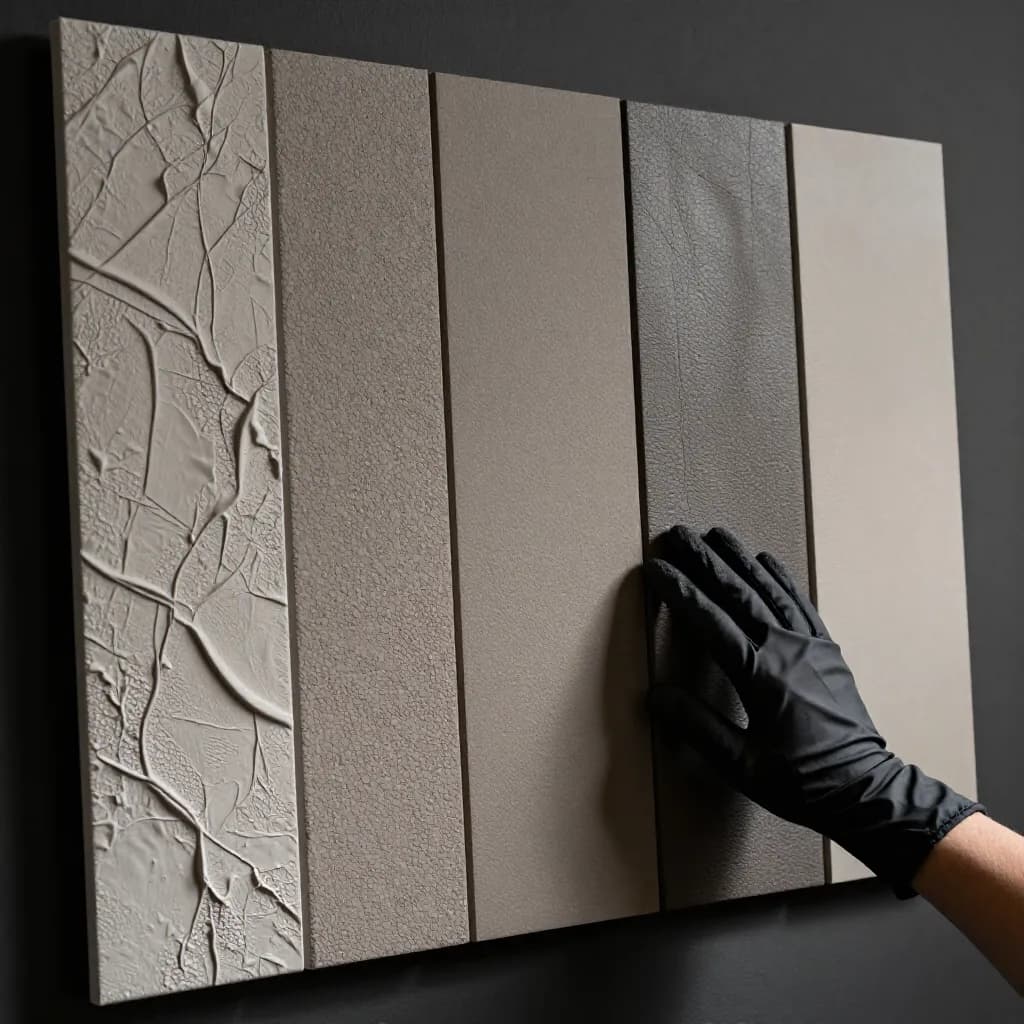
The texture category encompasses several distinct finish types: sand textures with fine granular surfaces, wrinkle textures with controlled surface distortion, hammertone patterns with circular metallic impressions, river textures with flowing organic patterns, and leather textures that replicate the appearance of natural leather. Each texture type is created through different formulation approaches and curing conditions.
Ready to Start Your Project?
From one-off customs to 15,000-part production runs — get precise pricing in 24 hours.
On This Page
Textured Powder Coatings: Functional and Decorative Surface Effects
This guide compares textured powder coatings from PPG, Sherwin-Williams, Axalta, TCI, Cardinal, Tiger Drylac, and IFS Coatings. We examine the specific textured products available, the texture types offered, and the application considerations that affect texture consistency.
PPG and Sherwin-Williams Textured Powder Coatings
PPG Industries offers textured options across both its Envirocron and Coraflon Platinum brands. The Envirocron hybrid line includes PCF90156 Black Texture at 2-5 gloss for interior applications. The Coraflon Platinum line provides AAMA 2605-certified textures including PCNT85107P Snowdrift Sparkle Texture in white, PCNT83101P Moondust Sparkle Texture in gray, PCNT99112P Black Flower Texture, all in FEVE fluoropolymer chemistry. These architectural textures combine the visual interest of textured surfaces with the long-term performance of fluoropolymer chemistry.
PPG's textured fluoropolymer options are distinctive in the market because most competitors offer textures only in polyester or hybrid chemistries. The ability to specify a textured finish with AAMA 2605 certification gives architects design flexibility that smooth-only fluoropolymer programs cannot provide.
Sherwin-Williams provides textured options through its Powdura ECO and general industrial lines. The Powdura ECO PBT2-80R09 Black Sand Texture at 5-15 gloss in polyester TGIC with recycled content serves the exterior market. The epoxy line includes EBT2-C0000 Carbide Black texture at 5-15 gloss for interior applications.
Sherwin-Williams' textured portfolio is more focused than PPG's, concentrating on black sand textures in both eco-recycled polyester and standard epoxy chemistries. For projects requiring textured finishes in colors other than black, Sherwin-Williams offers custom texture formulation.
TCI and Cardinal Textured Powder Coatings
TCI Powder Coatings provides architectural textures through its TruDurance line with AAMA 2604 certification. The 10012-91616-BX55 Black Tex at 3-7 gloss, 10012-93130-BX55 Black Mountain Tex at 2-4 gloss, and 10022-93172-BX55 KL White Tex at 3-5 gloss offer textured options in super durable polyester. The 10021-02630-BX55 Bonded Tex Bronze provides a metallic bonded textured finish at 5-10 gloss.
TCI's textured range is notable for including both black and white textures with AAMA 2604 certification, plus a metallic bonded texture in bronze. The Black Mountain Tex at 2-4 gloss provides one of the lowest-gloss textured finishes available in an AAMA-certified product.
Cardinal Paint and Powder offers the most extensive hammertone texture portfolio among the manufacturers compared. The Hammer Finishes line includes T013-BK62 Black Hammer, T013-BG38 Beige Hammer, T013-BL468 Blue Hammer, T012-BR161 Bronze Hammer, C013-GR08 Gray Hammer, T013-GN220 Green Hammer, and T013-GR185 additional gray options, all at 10-20 gloss in polyester TGIC. Cardinal also provides the Telecom line with six textured grays (C241 series) at 5-10 gloss in HAA polyester.
Cardinal's hammertone range covers seven colors, making it the broadest single-manufacturer hammertone selection available. The Telecom textures serve the outdoor enclosure market with purpose-built formulations. Cardinal's texture expertise extends to river, leather, and specialty texture effects through custom formulation.
Tiger Drylac, Axalta, and IFS Textured Options
Tiger Drylac USA does not list standard textured products in its architectural Series 38 catalog, focusing instead on smooth finishes for the building envelope market. However, Tiger Drylac's broader product range includes textured options in Series 49 TGIC Polyester and Series 68 specialty lines. Custom texture formulations are available for projects requiring specific texture profiles.
Axalta Coating Systems does not list standard textured products in its Alesta architectural catalog. Axalta's industrial powder coating lines include textured options for equipment and general industrial applications. Custom architectural textures can be developed in AR400 and AR500 chemistries for projects requiring AAMA-certified textured finishes.
IFS Coatings offers the FRML90501 Fine Texture Black Chrome at 0-15 gloss in 500FP fluoropolymer with AAMA 2605 certification. This product combines a fine texture surface with metallic chrome-black appearance, providing a distinctive finish for premium architectural applications. The 400SD variant SRML 90503 offers an AAMA 2604 option.
IFS's Fine Texture Black Chrome is notable as one of the very few textured products available in AAMA 2605 fluoropolymer chemistry, alongside PPG's Coraflon Platinum textures. For architects seeking textured finishes with maximum long-term performance, PPG and IFS are the primary options at the AAMA 2605 tier.
Texture Types: Sand, Hammertone, Wrinkle, and Specialty Effects
Sand textures create a fine, granular surface that resembles sandpaper or sandblasted metal. These are the most commonly specified textures for architectural and industrial applications because they provide consistent appearance, good scratch hiding, and reduced glare. PPG's Black Texture, Sherwin-Williams' Black Sand Texture, and TCI's Black Tex and Black Mountain Tex all fall into this category. Sand textures are created through the addition of texturing agents to the powder formulation.
Hammertone textures create a pattern of circular metallic impressions that resemble the marks left by a ball-peen hammer on metal. Cardinal's Hammer Finishes line is the leading hammertone portfolio, with seven colors available. Hammertone effects are created through the interaction of metallic pigments with specific flow and leveling additives during the curing process. The pattern is somewhat random, which means exact pattern matching between parts is not possible.
Wrinkle textures create a controlled surface distortion with a crinkled or creased appearance. These are popular for electronic enclosures, tool boxes, and industrial equipment where a rugged appearance is desired. Wrinkle textures are typically available in epoxy or hybrid chemistries for interior use.
Specialty textures include leather effects, river patterns, and multi-tonal textures that combine color variation with surface texture. These are typically custom formulations developed for specific applications. Cardinal and PPG both offer custom specialty texture development.
The choice of texture type affects both appearance and performance. Sand textures provide the most consistent appearance across large surfaces. Hammertone textures add decorative character but with inherent pattern variation. Wrinkle textures provide maximum surface area for heat dissipation in electronic applications.
Application Considerations for Textured Powder Coatings
Textured powder coatings require different application and curing parameters than smooth finishes. The texture development occurs during the curing process, and the final texture appearance is sensitive to film thickness, cure temperature, and cure time. Applying textured powder too thin results in insufficient texture development, while applying too thick can create an exaggerated texture that differs from the intended appearance.
For sand textures, the recommended film thickness is typically 2.5-4.0 mils, slightly higher than smooth finishes. The texture develops as the powder melts and the texturing agent creates controlled surface disruption during flow. Consistent film thickness across the part is essential for uniform texture appearance.
Hammertone textures require even more precise control of film thickness and cure conditions. The hammertone pattern develops through the interaction of metallic pigments with flow modifiers during a specific temperature window. Curing too fast or too slow can result in incomplete pattern development or excessive pattern size.
For architectural textured finishes, consistency between production batches is a key concern. Request retention samples from each production batch and compare them to the approved standard before releasing parts. Texture appearance can vary between powder batches due to minor differences in texturing agent dispersion.
Reclaim management is also important for textured powders. Some texturing agents can accumulate in reclaim powder, gradually changing the texture profile over time. Monitor texture appearance throughout production runs and adjust the virgin-to-reclaim ratio as needed to maintain consistency.
AAMA Certification and Manufacturer Selection for Textured Finishes
Textured powder coatings are available at AAMA 2604 and 2605 tiers from select manufacturers. For AAMA 2605, PPG Coraflon Platinum offers three textured options (Snowdrift Sparkle, Moondust Sparkle, Black Flower Texture) and IFS provides Fine Texture Black Chrome. For AAMA 2604, TCI TruDurance offers Black Tex, Black Mountain Tex, KL White Tex, and Bonded Tex Bronze.
The availability of AAMA-certified textures is more limited than smooth finishes because texture development adds complexity to the formulation and can affect weathering performance. The texturing agents and surface irregularities can create micro-areas of thin film that are more susceptible to UV degradation. Manufacturers that offer AAMA-certified textures have specifically engineered their formulations to maintain performance despite the textured surface.
For manufacturer selection, choose PPG when you need AAMA 2605 textured finishes in white, gray, or black with sparkle effects. Choose IFS for AAMA 2605 fine texture in metallic black chrome. Choose TCI for AAMA 2604 textures in black, white, and metallic bronze. Choose Cardinal for the widest hammertone color selection or telecom-grade textured grays.
Choose Sherwin-Williams for eco-recycled black sand texture. For custom texture development in specific colors or texture profiles, Cardinal and PPG offer the most extensive custom texture capabilities. For projects requiring textured finishes in colors not available as standard products, expect 6-10 weeks for custom development and approval.
Frequently Asked Questions
Which manufacturer offers the most textured powder coating colors?
Cardinal Paint and Powder offers the widest textured range with seven hammertone colors (black, beige, blue, bronze, gray, green, and additional options) plus six telecom gray textures. TCI provides four AAMA 2604 textured options. PPG offers three AAMA 2605 textured finishes.
Can textured powder coatings meet AAMA 2605 specifications?
Yes. PPG Coraflon Platinum offers Snowdrift Sparkle Texture, Moondust Sparkle Texture, and Black Flower Texture in FEVE fluoropolymer with AAMA 2605 certification. IFS provides Fine Texture Black Chrome in 500FP fluoropolymer with AAMA 2605. These are among the few textured products at this performance tier.
What is the difference between sand texture and hammertone?
Sand textures create a fine, uniform granular surface similar to sandpaper. Hammertone textures create circular metallic impressions resembling hammer marks. Sand textures provide more consistent appearance across large surfaces, while hammertone adds decorative character with inherent pattern variation.
Do textured powder coatings hide substrate imperfections?
Yes, textured finishes are significantly better at hiding substrate imperfections than smooth finishes. Sand textures and hammertone patterns mask minor surface defects, weld marks, and grinding marks that would be visible under smooth coatings. This makes textured finishes popular for fabricated steel and cast components.
Ready to Start Your Project?
From one-off customs to 15,000-part production runs — get precise pricing in 24 hours.