Silver metallic powder coatings span an enormous visual range, from subtle satin silvers that barely hint at metallic content to high-gloss chrome effects that approach the reflectivity of plated metal. This diversity makes silver metallics one of the most versatile color families in powder coating, serving applications from architectural curtain walls and automotive wheels to consumer electronics and furniture hardware.
Products
Best Silver Metallic Powder Coatings: Cross-Manufacturer Comparison Guide
Sundial Powder Coating·April 23, 2026·13 min
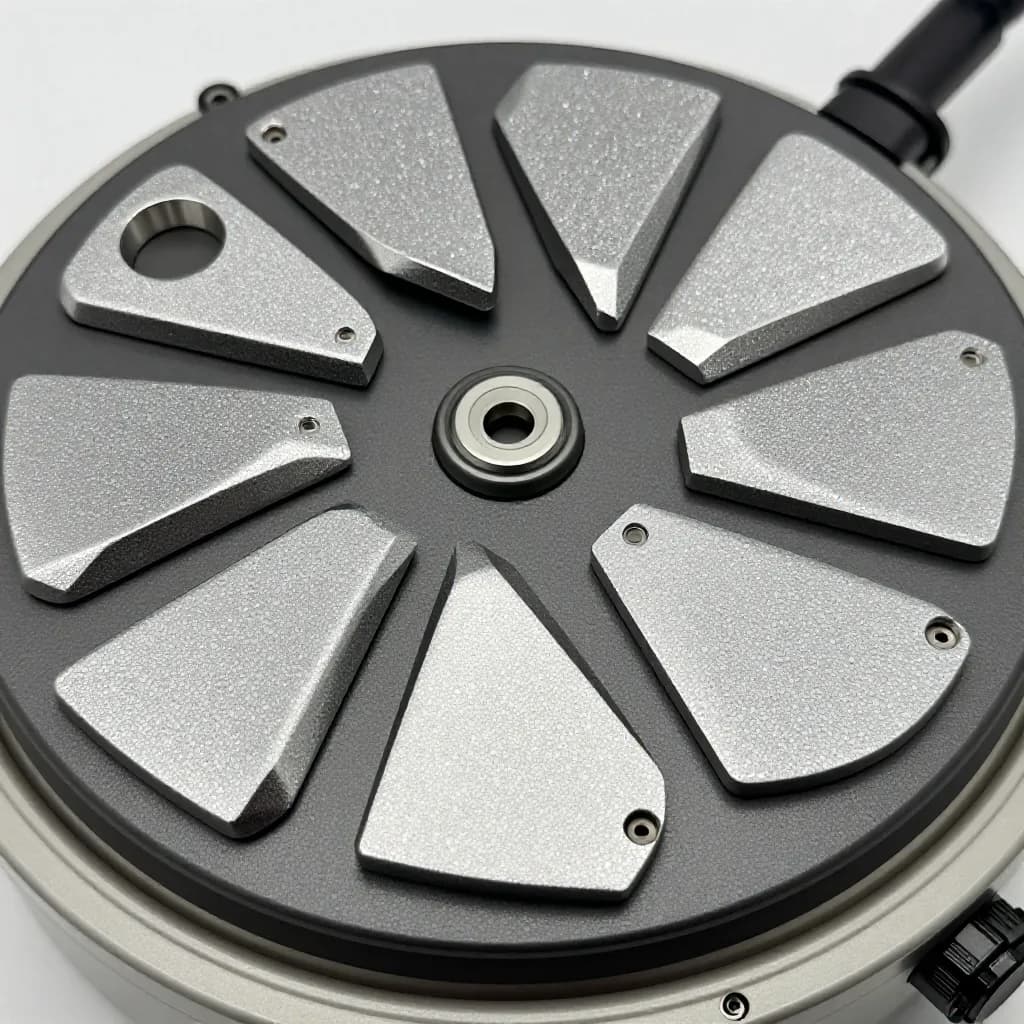
The visual effect of a silver metallic depends on three factors: the type and size of metallic pigment, the gloss level of the base resin, and the application method. Fine aluminum flake in a matte base creates a subtle anodized-aluminum appearance, while coarse aluminum flake in a high-gloss base produces a dramatic sparkle effect. Chrome-like silvers use specialized pigments and application techniques to maximize reflectivity.
Ready to Start Your Project?
From one-off customs to 15,000-part production runs — get precise pricing in 24 hours.
On This Page
Silver Metallic Powder Coatings: From Subtle Satin to Mirror Chrome
Every manufacturer in this comparison offers silver metallic options, but the approaches vary significantly. Some focus on architectural silvers designed for building facades, others emphasize decorative chrome effects for consumer products, and several offer both. This guide compares silver metallic powder coatings from PPG, Sherwin-Williams, Axalta, TCI, Cardinal, Tiger Drylac, and IFS Coatings, covering specific products, metallic types, and application considerations.
PPG and IFS Silver Metallic Powder Coatings
PPG Industries offers architectural silver metallics through its Coraflon Platinum line with AAMA 2605 certification. The PCNT75153P Platinum at 20-30 gloss and PCNT75235P Bright Silver at 30-40 gloss provide mica-finish silvers in FEVE fluoropolymer chemistry. The PCNT75236P Silver at 15-25 gloss adds a lower-gloss option. These products deliver the metallic appearance architects want with the long-term weathering performance that AAMA 2605 demands.
PPG's Envirocron line adds industrial silver options including metallic hybrids and polyester metallics for non-architectural applications. The Coraflon Platinum silvers use mica pigments rather than aluminum flake, which provides better UV stability and more consistent appearance over time compared to traditional aluminum-based metallics.
IFS Coatings provides the deepest silver metallic portfolio in the AAMA 2605 fluoropolymer segment. Options include FRSL94542 Anodized Silver, FRSS93652 Silver Sparkle, FRML95458 Matte Platinum, FRML90484 Sunlit Silver, FRML90488 Stormy Silver, FRML90492 Timeless Silver, and FRSL96595 Classic Platinum. This seven-product silver range spans matte to satin finishes with smooth, sparkle, and metallic bonded textures.
IFS differentiates by offering both 500FP fluoropolymer and 400SD super durable versions of the same silvers, allowing specifiers to choose the performance tier while maintaining color consistency. The matte metallic options at 0-15 gloss are particularly popular for contemporary architectural projects seeking a modern industrial aesthetic.
Axalta, TCI, and Sherwin-Williams Silver Metallics
Axalta Coating Systems offers architectural silver metallics through its Alesta AR400 line with AAMA 2604 certification. The CFA600B1 Arcadia Silver, CFA606B1 Axalta Silver, and HFA603B5 Stardust Silver all provide metallic bonded finishes at 30-40 gloss. The HFH606B4 Axalta Aluminum Sparkle adds a sparkle effect at 30-40 gloss. These products use bonded metallic technology for consistent pigment distribution across large architectural surfaces.
Axalta's Anodic Collection includes silver-toned options that bridge the gap between silver and gray, providing the appearance of anodized aluminum in powder coating form. The bonded metallic technology used across Axalta's silver range ensures that metallic pigment does not separate during reclaim, maintaining consistent appearance throughout production runs.
TCI Powder Coatings provides architectural silvers through its TruDurance line. The 10211-02558-BX55 Bonded Anodized Silver at 20-35 gloss with AAMA 2604 certification uses bonded metallic technology for an anodized aluminum appearance. TCI's TruBond program also includes the 1100001111-0033005500-BX55 Bonded GW Anodized Silver at 0-9 gloss with a TruAnodize finish.
Sherwin-Williams offers the PSZ4-80R00 Anodized Silver in its Powdura ECO line at 25-40 gloss with recycled content and polyester TGIC chemistry. This product provides a metallic blended finish suitable for exterior use. The RAL Program covers RAL 9006 White Aluminium and RAL 9007 Grey Aluminium in super durable TGIC-free chemistry for projects requiring exact RAL metallic matches.
Cardinal and Tiger Drylac Silver and Chrome Effects
Cardinal Paint and Powder offers the most extensive silver metallic range among the manufacturers compared, with products spanning multiple gloss levels and metallic intensities. The T391-GR1031 Silver Metallic Texture provides an exterior-grade metallic texture at 30-40 gloss in polyester TGIC that requires no clear coat. The standard Metallics line includes T353-GR06 Silver Metallic at 30 gloss, T353-GR938 Silver Metallic Alt at 30 gloss, C356-GR1342 Silver Metallic at 60 gloss in HAA polyester, T357-GR105 Silver Metallic at 70 gloss, and T358-GR539 Chrome Metallic at 80 gloss.
Cardinal's silver range is notable for spanning the full gloss spectrum from 30 to 80 gloss, allowing specifiers to select the exact level of metallic intensity needed. The Chrome Metallic at 80 gloss approaches a chrome-like appearance while remaining a single-coat powder application. Most Cardinal silver metallics require a clear topcoat for exterior durability.
Tiger Drylac USA provides silver metallics across its Series 49 TGIC Polyester and Series 38 Super Durable lines. The Series 49 includes 49/91260 Mirror Silver, 49/90450 Sparkle Silver, 49/90056 Ultra Chrome, and 49/91312 Chrome OGF (outgassing forgiving) at 90+ gloss. These high-gloss metallics are designed as basecoats for two-coat chrome-effect systems. The Series 38 includes 038/70049 (Silver) Grey at 25-35 gloss with AAMA 2604 certification for architectural applications.
Tiger Drylac's chrome-effect products are among the most reflective powder coatings available, with the Ultra Chrome approaching electroplated chrome in appearance when properly applied with a clear topcoat.
Bonded vs. Blended Metallics: Application Considerations
Silver metallic powder coatings are manufactured using two primary methods: bonding and blending. Understanding the difference is critical for achieving consistent results, particularly on large surfaces and in production environments that reclaim overspray.
Bonded metallics attach the metallic pigment particles directly to the powder particles during a secondary manufacturing step. This ensures that the metallic pigment and the base powder travel together through the application system, producing consistent metallic distribution regardless of spray parameters or reclaim ratios. Axalta's CFA-series silvers, TCI's Bonded Anodized Silver, and IFS's metallic options all use bonded technology. Bonded metallics are the preferred choice for architectural applications where appearance consistency across large surfaces is critical.
Blended metallics simply mix metallic pigment with base powder without bonding. This is less expensive to manufacture but creates a risk of metallic separation during application and reclaim. The metallic pigment particles have different electrostatic charging characteristics than the base powder, which can cause them to deposit at different rates. Over time, the ratio of metallic to base powder in the reclaim changes, leading to visible variation in metallic intensity. Cardinal's standard Metallics line and some PPG Envirocron metallics use blended technology.
For production environments, bonded metallics offer significant advantages in consistency and waste reduction. The ability to reclaim and reuse overspray without metallic separation means higher material utilization and fewer color-consistency rejects. For one-off custom work where reclaim is not a factor, blended metallics can provide acceptable results at lower material cost.
Chrome-Effect Powder Coatings and Two-Coat Systems
The highest-reflectivity silver powder coatings use specialized two-coat systems to achieve chrome-like effects. Tiger Drylac's 49/90056 Ultra Chrome and 49/91260 Mirror Silver are designed as basecoats that require a clear powder topcoat to achieve their full chrome appearance and provide exterior durability. Cardinal's T358-GR539 Chrome Metallic at 80 gloss similarly benefits from a clear topcoat for maximum reflectivity and protection.
Two-coat chrome systems work by applying a highly reflective metallic basecoat, curing it, then applying a clear powder topcoat and curing again. The clear coat serves dual purposes: it protects the metallic pigment from oxidation and environmental damage, and it adds depth and gloss that enhance the chrome effect. Tiger Drylac's 38/00001 Clear Glossy and 49/01234 Bengal Clear Glossy are designed as companion topcoats for their metallic basecoats.
The outgassing-forgiving (OGF) variants like Tiger Drylac's 49/91312 Chrome OGF are formulated to tolerate the gas release that occurs when coating cast aluminum and other porous substrates. Standard chrome metallics can develop pinholes and surface defects on outgassing substrates, making OGF variants essential for automotive wheel and cast component applications.
Chrome-effect powder coatings cannot match the reflectivity of electroplated chrome, but they offer significant advantages in environmental compliance, cost, and substrate flexibility. They are increasingly specified for automotive trim, consumer electronics, and architectural hardware where a bright metallic appearance is desired without the environmental burden of hexavalent chromium plating.
RAL Equivalents and Specification Guidance for Silver Metallics
The primary RAL reference for silver metallic powder coatings is RAL 9006 White Aluminium, which represents a medium-brightness silver with moderate metallic content. RAL 9007 Grey Aluminium provides a darker, more subdued silver reference. Both are available from Sherwin-Williams' RAL Program in super durable TGIC-free chemistry.
However, RAL references are less useful for silver metallics than for solid colors because the metallic effect varies dramatically based on pigment type, particle size, and application method. Two products both matching RAL 9006 can look very different in person if one uses fine aluminum flake and the other uses coarse mica pigment. For silver metallics, physical samples evaluated under actual project lighting are essential.
For architectural projects requiring AAMA 2605 certification, IFS Coatings offers the widest silver metallic selection in fluoropolymer chemistry with seven options. PPG Coraflon Platinum provides three mica-based silvers with excellent long-term stability. For AAMA 2604 projects, Axalta and TCI offer bonded metallic silvers with consistent application characteristics.
For decorative and automotive applications where chrome effect is the priority, Tiger Drylac's Series 49 chrome metallics and Cardinal's Chrome Metallic provide the highest reflectivity options. These products typically require clear topcoats and are not AAMA-certified, but they deliver visual impact that architectural-grade silvers cannot match. Choose the manufacturer based on whether your priority is long-term architectural performance or maximum metallic visual effect.
Frequently Asked Questions
What is the most reflective silver powder coating available?
Tiger Drylac's 49/90056 Ultra Chrome and 49/91260 Mirror Silver are among the most reflective powder coatings available, approaching electroplated chrome in appearance when applied with a clear topcoat. Cardinal's T358-GR539 Chrome Metallic at 80 gloss also provides high reflectivity in a single-coat application.
Which silver metallic powder coatings meet AAMA 2605?
IFS Coatings offers seven AAMA 2605 silver metallics in fluoropolymer chemistry including Anodized Silver, Silver Sparkle, Matte Platinum, Sunlit Silver, Stormy Silver, Timeless Silver, and Classic Platinum. PPG Coraflon Platinum provides Platinum, Bright Silver, and Silver in FEVE fluoropolymer with AAMA 2605 certification.
Should I use bonded or blended metallic silver powder coating?
Bonded metallics are preferred for architectural and production applications because they maintain consistent metallic distribution during reclaim and reuse. Blended metallics are acceptable for one-off custom work where reclaim is not a factor. For large surfaces where appearance consistency is critical, always specify bonded metallic technology.
Do silver metallic powder coatings need a clear topcoat?
It depends on the product. Cardinal's T391-GR1031 Silver Metallic Texture is designed for exterior use without a clear coat. Most high-reflectivity chrome-effect metallics from Tiger Drylac and Cardinal require a clear topcoat for exterior durability. Architectural metallics from IFS, Axalta, and TCI are formulated as single-coat systems.
What is the RAL equivalent for silver metallic powder coating?
RAL 9006 White Aluminium is the primary reference for medium-brightness silver metallics, and RAL 9007 Grey Aluminium represents a darker silver. However, RAL references are less reliable for metallics than solid colors because metallic appearance varies with pigment type and application. Always evaluate physical samples.
Ready to Start Your Project?
From one-off customs to 15,000-part production runs — get precise pricing in 24 hours.