Primer powder coatings provide the critical first layer of corrosion protection in two-coat powder coating systems. While many powder coating applications use single-coat systems, demanding environments and specifications often require a dedicated primer to maximize adhesion, corrosion resistance, and long-term coating system performance. Primers are particularly important for steel substrates in marine, industrial, and infrastructure applications.
Products
Best Primer Powder Coatings: Cross-Manufacturer Comparison Guide
Sundial Powder Coating·April 23, 2026·13 min
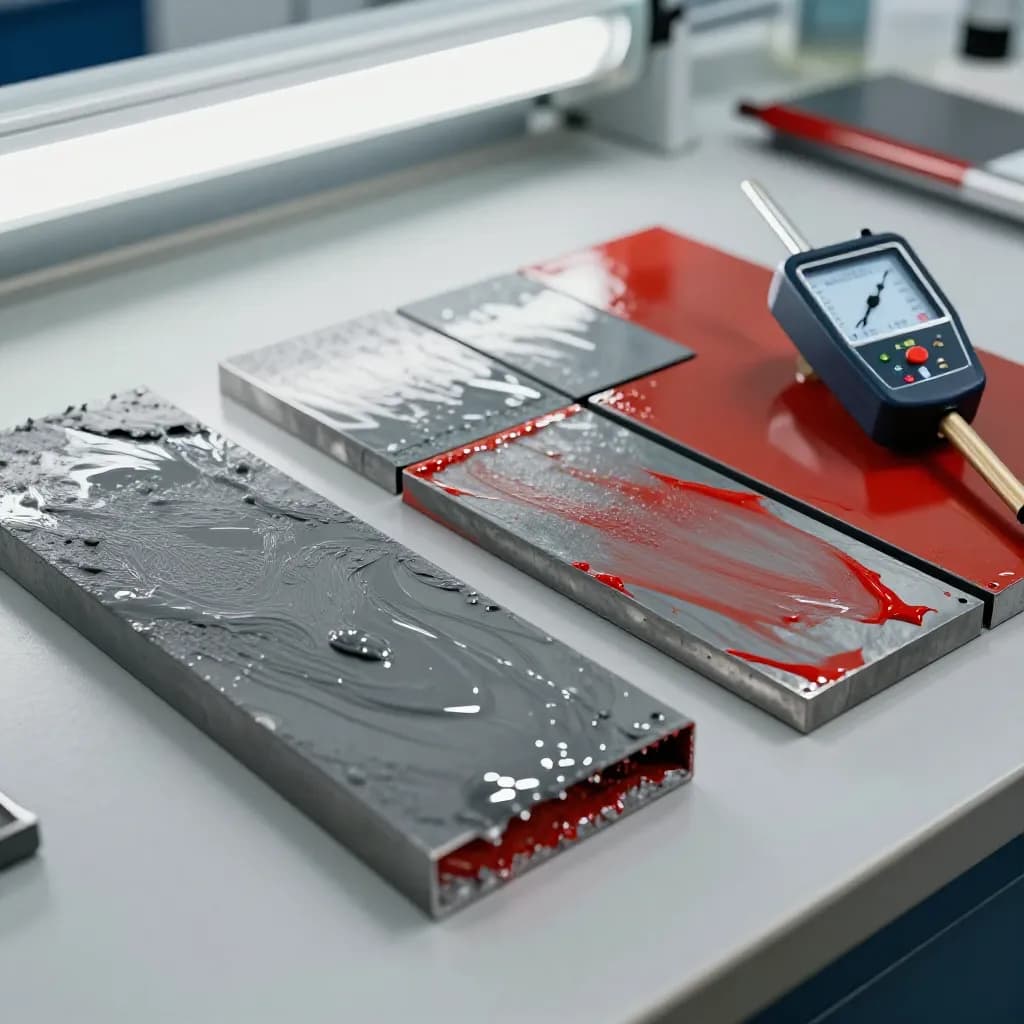
The primer market divides into several categories based on the protection mechanism. Zinc-rich primers provide cathodic protection similar to galvanizing. Standard epoxy primers offer barrier protection with excellent adhesion. Anti-gas primers are formulated to tolerate outgassing from cast and porous substrates. Post-forming primers maintain flexibility for parts that will be bent or formed after coating.
Ready to Start Your Project?
From one-off customs to 15,000-part production runs — get precise pricing in 24 hours.
On This Page
Primer Powder Coatings: The Foundation of Corrosion Protection
This guide compares primer powder coatings from PPG, Sherwin-Williams, Axalta, TCI, Cardinal, Tiger Drylac, and IFS Coatings. We examine the specific primer products available, their protection mechanisms, and the applications they serve.
PPG Primer Powder Coatings: Envirocron Range
PPG Industries offers the most comprehensive primer portfolio through its Envirocron brand. The zinc-rich primers include PCM70140 Zinc Primer Gray at 55-70 gloss and PCM90144 Zinc Primer Gray (Low-Gloss) at 2-6 gloss, both in epoxy chemistry with quick-ship availability. These zinc-rich primers provide cathodic protection for steel substrates in corrosive environments.
The standard epoxy primers include PCM70102 with anti-gas properties for cast and porous substrates, and PCM90133 Low-Gloss Black and PCM90133L Low Cure Black for economical corrosion protection. The low-cure variant enables priming of heat-sensitive assemblies at reduced temperatures.
The ultra-durable primer PCS79102 in polyester chemistry provides exterior-grade primer performance with anti-gas properties, suitable for substrates that will receive a polyester topcoat for outdoor use. The semi-conductive PCMT70101 serves specialized applications requiring controlled electrical conductivity.
The post-forming primer PCF70283 in epoxy-polyester hybrid chemistry maintains flexibility after cure, allowing primed parts to be bent, formed, or roll-formed without cracking the primer layer. This is essential for window frame and curtain wall manufacturing where profiles are formed after coating.
PPG's military-grade primers include MLP70001 Gray Primer meeting MIL-SPEC 595-26307 and MLP80000 Low-Gloss White Primer meeting MIL-SPEC 595-26622. These products serve defense and government applications requiring documented military specification compliance.
Sherwin-Williams Primer Powder Coatings
Sherwin-Williams provides primer powder coatings through its Powdura line in epoxy chemistry. The EAS6-C0000 Gray Primer serves as the standard epoxy primer for interior applications, providing good adhesion and corrosion resistance on steel substrates.
The EAS6-C0025 Zinc Rich Primer provides cathodic protection with zinc-rich epoxy chemistry and carries MIL-PRF-32550 Type 3 Form A certification for military applications. This zinc-rich primer is one of the few powder coating primers with documented military specification compliance, making it essential for defense contractors and government suppliers.
Sherwin-Williams' primer portfolio is more focused than PPG's, concentrating on the two most commonly needed primer types: standard gray epoxy and zinc-rich epoxy. For specialized primer requirements such as anti-gas, post-forming, or low-cure, Sherwin-Williams offers custom formulation through their technical development team.
The military certification of Sherwin-Williams' zinc-rich primer is a significant differentiator. MIL-PRF-32550 is the current military specification for zinc-rich primers, and having a pre-certified product eliminates the need for individual lot testing and qualification. This saves significant time and cost for defense-related coating projects.
For commercial and industrial applications, Sherwin-Williams' standard gray primer provides reliable performance at competitive cost. The product is widely available through Sherwin-Williams' distribution network, ensuring fast availability for production environments.
Cardinal, Tiger Drylac, Axalta, TCI, and IFS Primer Options
Cardinal Paint and Powder does not list dedicated primer products in their standard catalog, as their product families focus on topcoat finishes. For two-coat systems requiring primers, Cardinal recommends compatible primers from their custom formulation program or third-party primer manufacturers.
Tiger Drylac USA does not list standard primer products in their catalog. Tiger Drylac's product range focuses on topcoat finishes across their Series 38, 41, 44, 49, and 69 lines. For projects requiring primers under Tiger Drylac topcoats, the company can recommend compatible primer products.
Axalta Coating Systems offers primer products through its industrial powder coating lines rather than the Alesta architectural brand. Axalta's primers include standard epoxy and zinc-rich options for industrial applications. The company's architectural products are designed as single-coat systems that do not require separate primers when applied over properly pretreated substrates.
TCI Powder Coatings does not list standard primer products in their TruDurance architectural catalog. TCI's architectural coatings are formulated for direct-to-substrate application over chrome or non-chrome pretreatment systems. For projects requiring primers, TCI can recommend compatible products.
IFS Coatings does not list standard primer products in their catalog. IFS's architectural coatings are designed for single-coat application over properly pretreated aluminum and steel substrates. The company's focus on architectural fluoropolymer and super durable topcoats means primer requirements are addressed through pretreatment specification rather than separate primer coats.
Zinc-Rich vs. Standard Epoxy Primers: When to Use Each
The choice between zinc-rich and standard epoxy primers depends on the corrosion environment, substrate type, and specification requirements. Zinc-rich primers contain 75-95% zinc dust by weight in the dry film, providing cathodic (sacrificial) protection similar to hot-dip galvanizing. When the coating is damaged, the zinc corrodes preferentially to protect the underlying steel. This makes zinc-rich primers essential for severe corrosion environments including marine, coastal, chemical processing, and infrastructure applications.
Standard epoxy primers provide barrier protection by creating an impermeable film between the substrate and the environment. They offer excellent adhesion to steel and aluminum substrates and provide good corrosion resistance in moderate environments. Standard epoxy primers are the appropriate choice for interior applications, mild exterior environments, and substrates that will receive a durable topcoat.
Zinc-rich primers are specified when the coating system must provide corrosion protection even if the topcoat is damaged. This is critical for structural steel, bridges, marine vessels, and industrial equipment where coating damage from impact, abrasion, or thermal cycling is expected. The cathodic protection mechanism continues to protect exposed steel at damage sites.
Standard epoxy primers are preferred when the primary concern is adhesion promotion and moderate corrosion resistance. They are less expensive than zinc-rich primers and easier to apply, making them the default choice for general industrial applications. Standard epoxy primers also provide better intercoat adhesion with a wider range of topcoat chemistries.
For projects requiring documented corrosion protection, specify the primer by performance standard rather than generic type. SSPC-Paint 20 defines zinc-rich primer requirements, while various ASTM standards define salt spray and cyclic corrosion test requirements for primer systems.
Anti-Gas and Post-Forming Specialty Primers
Anti-gas primers address the specific challenge of coating cast aluminum, galvanized steel, and other substrates that release gas during the curing process. When standard primers or topcoats are applied to these substrates, the gas escaping through the coating creates pinholes, craters, and surface defects that compromise both appearance and protection.
PPG's PCM70102 and PCS79102 primers are formulated with anti-gas properties that allow gas to escape through the primer film before it fully crosslinks. The primer remains permeable longer during the cure cycle, providing a path for gas to exit without creating surface defects. The topcoat is then applied over the cured primer, which has already allowed the substrate to outgas.
Post-forming primers like PPG's PCF70283 are formulated to maintain flexibility after cure, allowing the primed substrate to be bent, roll-formed, or otherwise mechanically deformed without cracking the primer layer. This is essential for manufacturing processes where coating occurs before final forming, such as window frame and curtain wall profile production.
Post-forming primers use epoxy-polyester hybrid chemistry that provides a balance of adhesion, corrosion resistance, and flexibility. The hybrid chemistry allows the primer to elongate with the substrate during forming without losing adhesion or creating micro-cracks that would compromise corrosion protection.
For manufacturer selection, choose PPG for the widest primer range including zinc-rich, anti-gas, post-forming, low-cure, and military-grade options. Choose Sherwin-Williams for military-certified zinc-rich primer and standard gray epoxy primer with broad distribution. For projects requiring primers from other manufacturers, confirm compatibility with the intended topcoat system before specifying.
Frequently Asked Questions
Which manufacturer offers the most primer powder coating options?
PPG Envirocron offers the most comprehensive primer portfolio with zinc-rich, standard epoxy, anti-gas, post-forming, low-cure, ultra-durable, semi-conductive, and military-grade options. Sherwin-Williams provides standard gray epoxy and military-certified zinc-rich primers. Other manufacturers focus on topcoat products.
When should I use a zinc-rich primer instead of standard epoxy?
Use zinc-rich primers for severe corrosion environments including marine, coastal, chemical processing, and infrastructure applications where the coating may be damaged. Zinc-rich primers provide cathodic protection that continues to protect steel even at damage sites. Standard epoxy primers are sufficient for moderate environments and interior applications.
What primer works on cast aluminum that outgasses?
PPG Envirocron PCM70102 and PCS79102 primers are formulated with anti-gas properties specifically for outgassing substrates like cast aluminum and galvanized steel. These primers remain permeable during cure, allowing gas to escape without creating pinholes or surface defects.
Is there a military-certified powder coating primer?
Yes. PPG offers MLP70001 Gray Primer (MIL-SPEC 595-26307) and MLP80000 White Primer (MIL-SPEC 595-26622). Sherwin-Williams provides EAS6-C0025 Zinc Rich Primer certified to MIL-PRF-32550 Type 3 Form A. These pre-certified products eliminate individual lot qualification requirements.
Do architectural powder coatings need a separate primer?
Most architectural powder coatings from TCI, Tiger Drylac, Axalta, and IFS are designed as single-coat systems over properly pretreated substrates. Separate primers are typically required only for severe corrosion environments, outgassing substrates, or when specified by the coating system manufacturer.
Ready to Start Your Project?
From one-off customs to 15,000-part production runs — get precise pricing in 24 hours.