High-temperature powder coatings are engineered to maintain their appearance and protective properties at continuous service temperatures that would degrade standard powder coatings. While conventional polyester and hybrid powder coatings are rated for continuous service up to 200-250 degrees Fahrenheit, high-temperature formulations can withstand 400-1200 degrees Fahrenheit depending on the chemistry and application.
Products
Best High-Temperature Powder Coatings: Cross-Manufacturer Comparison Guide
Sundial Powder Coating·April 23, 2026·13 min
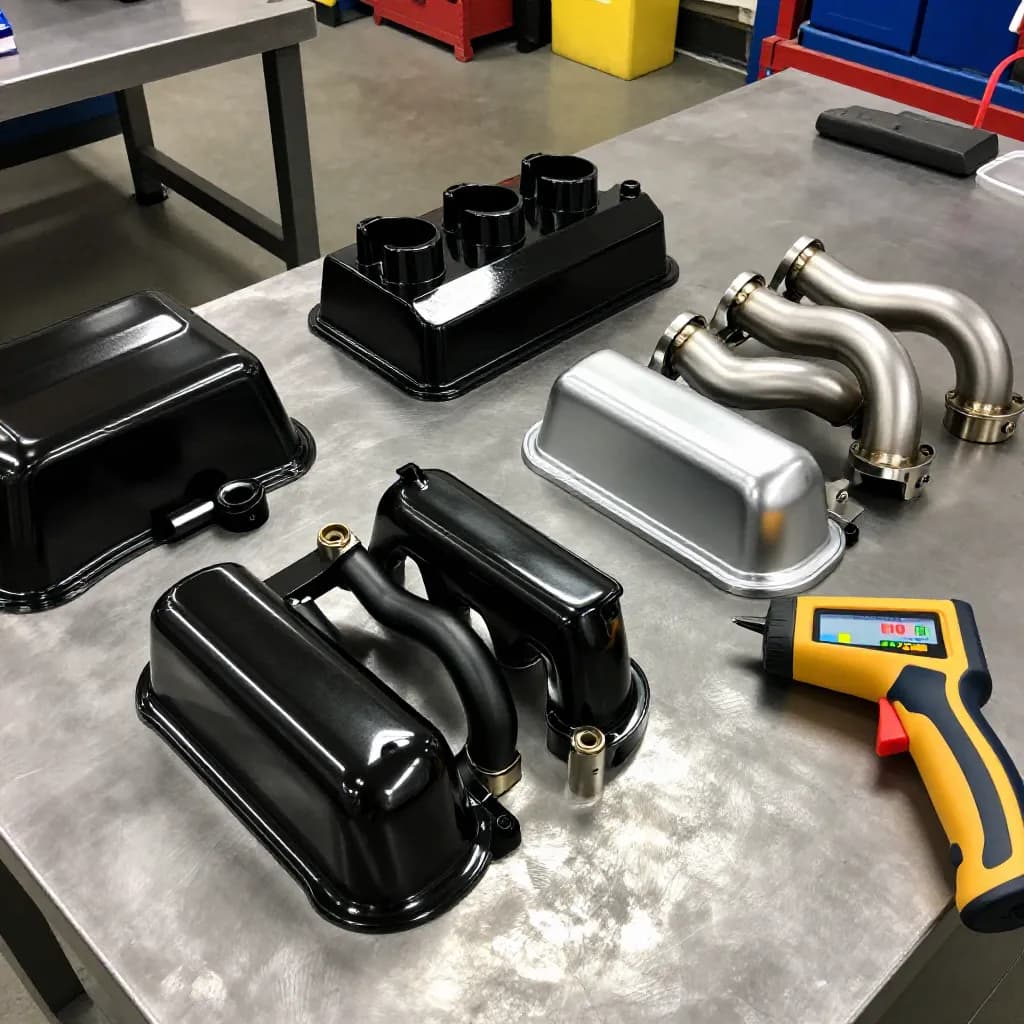
These specialty coatings serve applications including automotive exhaust systems, fireplace inserts and accessories, industrial ovens and furnaces, barbecue grills, engine components, heat exchangers, and chimney pipes. The growing aftermarket automotive and outdoor living markets have driven increased demand for high-temperature powder coatings in a wider range of colors and finishes.
Ready to Start Your Project?
From one-off customs to 15,000-part production runs — get precise pricing in 24 hours.
On This Page
High-Temperature Powder Coatings: Performance Beyond Standard Cure
High-temperature powder coatings use specialized resin systems, typically silicone-modified polyester or pure silicone chemistry, that maintain their molecular structure at elevated temperatures. Standard organic resins decompose at high temperatures, causing discoloration, chalking, and loss of adhesion. This guide compares high-temperature options from the seven major manufacturers.
Tiger Drylac High-Temperature Powder Coatings
Tiger Drylac USA is one of the leading manufacturers of high-temperature powder coatings through its Series 68 product line. The Series 68 uses silicone-modified polyester chemistry rated for continuous service temperatures up to 1000-1200 degrees Fahrenheit, depending on the specific product and color.
Tiger Drylac's high-temperature range includes blacks, silvers, grays, and select colors in both smooth and textured finishes. The Series 68 products are widely used in the automotive aftermarket for exhaust headers, manifolds, and engine components, as well as in the outdoor living market for fire pits, grills, and fireplace accessories.
The Series 68 products cure at standard powder coating temperatures (375-400 degrees Fahrenheit) but are formulated to withstand much higher service temperatures after cure. This means they can be applied using standard powder coating equipment and processes, unlike some liquid high-temperature coatings that require specialized application methods.
Tiger Drylac's strength in high-temperature coatings is the combination of proven performance, broad color availability, and compatibility with standard application equipment. The Series 68 line has been a market standard for high-temperature powder coating for many years, with extensive field performance data across automotive, industrial, and consumer applications.
PPG, Sherwin-Williams, and Cardinal High-Temperature Options
PPG Industries offers high-temperature powder coatings through its Envirocron line using silicone-modified polyester and silicone chemistries. PPG's high-temperature products are available in black, silver, gray, and select colors for automotive, industrial, and consumer applications. The Envirocron high-temperature line includes both smooth and textured finishes rated for continuous service up to 600-1000 degrees Fahrenheit.
PPG's technical support for high-temperature applications is a differentiator, as the company provides detailed thermal cycling data and application guidance for specific end-use environments. For custom high-temperature formulations, PPG's formulation team can develop products optimized for specific temperature ranges and color requirements.
Sherwin-Williams provides high-temperature powder coatings through its Powdura line in silicone-modified chemistries. Standard high-temperature colors include black, silver, and gray in smooth and textured finishes. Sherwin-Williams' high-temperature products serve the automotive aftermarket, outdoor living, and industrial equipment markets.
Cardinal Paint and Powder offers high-temperature options through its specialty product lines. Cardinal's high-temperature coatings are available in black and select colors for fireplace accessories, grills, and automotive components. The company's expertise in specialty finishes extends to high-temperature hammertone and textured effects that add decorative character to heat-exposed surfaces.
All three manufacturers provide high-temperature products that cure at standard temperatures but withstand elevated service temperatures, making them compatible with standard powder coating application equipment.
Axalta, TCI, and IFS High-Temperature Considerations
Axalta Coating Systems offers high-temperature powder coatings through its industrial product lines. Axalta's high-temperature products use silicone-modified polyester chemistry for applications up to 600-800 degrees Fahrenheit. The company's automotive heritage provides strong technical expertise for exhaust system and engine component applications.
TCI Powder Coatings does not list standard high-temperature products in their TruDurance architectural catalog, as the architectural market does not typically require high-temperature performance. TCI's industrial product lines may include high-temperature options for specific OEM applications. For projects requiring high-temperature coatings, TCI can provide custom formulations through their specialty development program.
IFS Coatings similarly focuses on architectural and industrial topcoats rather than high-temperature specialty products. IFS's product development capabilities can accommodate custom high-temperature formulations for specific project requirements, but standard high-temperature products are not part of their catalog.
The high-temperature powder coating market is served primarily by manufacturers with strong automotive and industrial market presence. Tiger Drylac, PPG, Sherwin-Williams, and Cardinal all maintain standard high-temperature product lines, while Axalta provides high-temperature options through its industrial programs. TCI and IFS focus on other market segments.
For projects requiring high-temperature powder coatings, the manufacturer choice should be driven by the specific temperature range, color requirements, and finish type needed. Tiger Drylac's Series 68 provides the broadest standard selection, while PPG and Sherwin-Williams offer strong technical support for custom applications.
Temperature Ratings and Resin Chemistry for High-Heat Applications
High-temperature powder coatings are rated by their maximum continuous service temperature, which varies by resin chemistry and formulation. Understanding these ratings is essential for selecting the right product for each application.
Standard polyester and hybrid powder coatings are rated for continuous service up to 200-250 degrees Fahrenheit. Above this temperature, the organic resin begins to degrade, causing yellowing, chalking, and eventual coating failure. These products are not suitable for any heat-exposed application.
Silicone-modified polyester coatings extend the service range to 400-600 degrees Fahrenheit. These products blend silicone resin with polyester to create a hybrid that maintains appearance and adhesion at moderate elevated temperatures. They are suitable for applications like oven exteriors, heat shields, and components that experience intermittent heat exposure.
Pure silicone coatings provide the highest temperature resistance, rated for continuous service at 800-1200 degrees Fahrenheit. These products use silicone resin as the primary binder, which maintains its molecular structure at temperatures that would destroy organic resins. Pure silicone coatings are essential for exhaust systems, fireplace inserts, industrial furnace components, and other applications with direct heat exposure.
Ceramic-enhanced silicone coatings push the temperature envelope even further, with some formulations rated for intermittent exposure up to 1500 degrees Fahrenheit. These specialty products incorporate ceramic particles that provide additional thermal barrier properties.
When specifying high-temperature powder coatings, always specify the maximum continuous service temperature rather than the peak temperature. Many applications experience temperature cycling, and the continuous rating ensures the coating will perform reliably over thousands of heating and cooling cycles.
Color Limitations and Application Guidance for High-Temperature Powders
High-temperature powder coatings have more limited color options than standard powder coatings because many pigments are not stable at elevated temperatures. Organic pigments used in bright reds, yellows, oranges, and greens decompose at temperatures above 400-500 degrees Fahrenheit, limiting the color palette for high-temperature applications.
Black is the most widely available high-temperature color because carbon black pigment is stable to extremely high temperatures. Silver and metallic gray options use aluminum pigments that are also heat-stable. Medium grays use blends of carbon black and titanium dioxide. White high-temperature coatings are available but may yellow at the highest service temperatures due to thermal effects on the titanium dioxide pigment.
For applications requiring colors beyond black, silver, and gray, the maximum service temperature may need to be reduced. Some manufacturers offer red, blue, and green high-temperature coatings rated for 400-600 degrees Fahrenheit using heat-stable inorganic pigments, but these colors are not available at the 800-1200 degree range.
Application of high-temperature powder coatings follows standard powder coating procedures with a few important modifications. Substrate preparation is critical because high-temperature service can cause adhesion failure if the surface is not properly cleaned and profiled. Phosphate pretreatment is recommended for steel substrates, while aluminum substrates should be cleaned and etched.
Film thickness for high-temperature coatings is typically 1.5-3.0 mils, slightly thinner than standard powder coatings. Excessive film thickness can lead to cracking during thermal cycling as the coating expands and contracts. Follow the manufacturer's recommended film thickness range for the specific product and application temperature.
Frequently Asked Questions
What is the maximum temperature for powder coating?
Pure silicone high-temperature powder coatings can withstand continuous service at 800-1200 degrees Fahrenheit. Ceramic-enhanced formulations can handle intermittent exposure up to 1500 degrees Fahrenheit. Standard powder coatings are limited to 200-250 degrees Fahrenheit continuous service.
Which manufacturer leads in high-temperature powder coatings?
Tiger Drylac's Series 68 is the market-leading high-temperature powder coating line with the broadest standard color and finish selection. PPG Envirocron and Sherwin-Williams Powdura also offer comprehensive high-temperature ranges. Cardinal provides specialty high-temperature options including decorative finishes.
Can I get colored high-temperature powder coatings?
Black, silver, and gray are available at the highest temperature ratings (800-1200°F). Limited colors including red, blue, and green are available at moderate high temperatures (400-600°F) using heat-stable inorganic pigments. Bright organic colors are not available for high-temperature applications.
Do high-temperature powder coatings require special application equipment?
No. High-temperature powder coatings cure at standard temperatures (375-400°F) and can be applied using standard electrostatic spray equipment. The high-temperature rating refers to the service temperature after cure, not the application or cure temperature. Standard powder coating lines can process these products.
What high-temperature powder coating works for exhaust systems?
Tiger Drylac Series 68 silicone-based coatings rated for 1000-1200°F are the standard choice for exhaust headers and manifolds. PPG and Sherwin-Williams also offer silicone-based options for exhaust applications. Black and silver are the most common colors for exhaust system coating.
Ready to Start Your Project?
From one-off customs to 15,000-part production runs — get precise pricing in 24 hours.