The largest and most influential cohort study of painters ever conducted began not in a research laboratory but in union halls across the United States. In 1986, NIOSH researchers began following the membership of the International Brotherhood of Painters and Allied Trades - a cohort that would eventually encompass 57,000 workers and provide the definitive mortality profile of the American painting profession.
paint-and-liquid-coatings-risks
The 57,000-Painter US Cohort: Four Decades of Mortality Data
Sundial Research Team·February 13, 2025·6 min
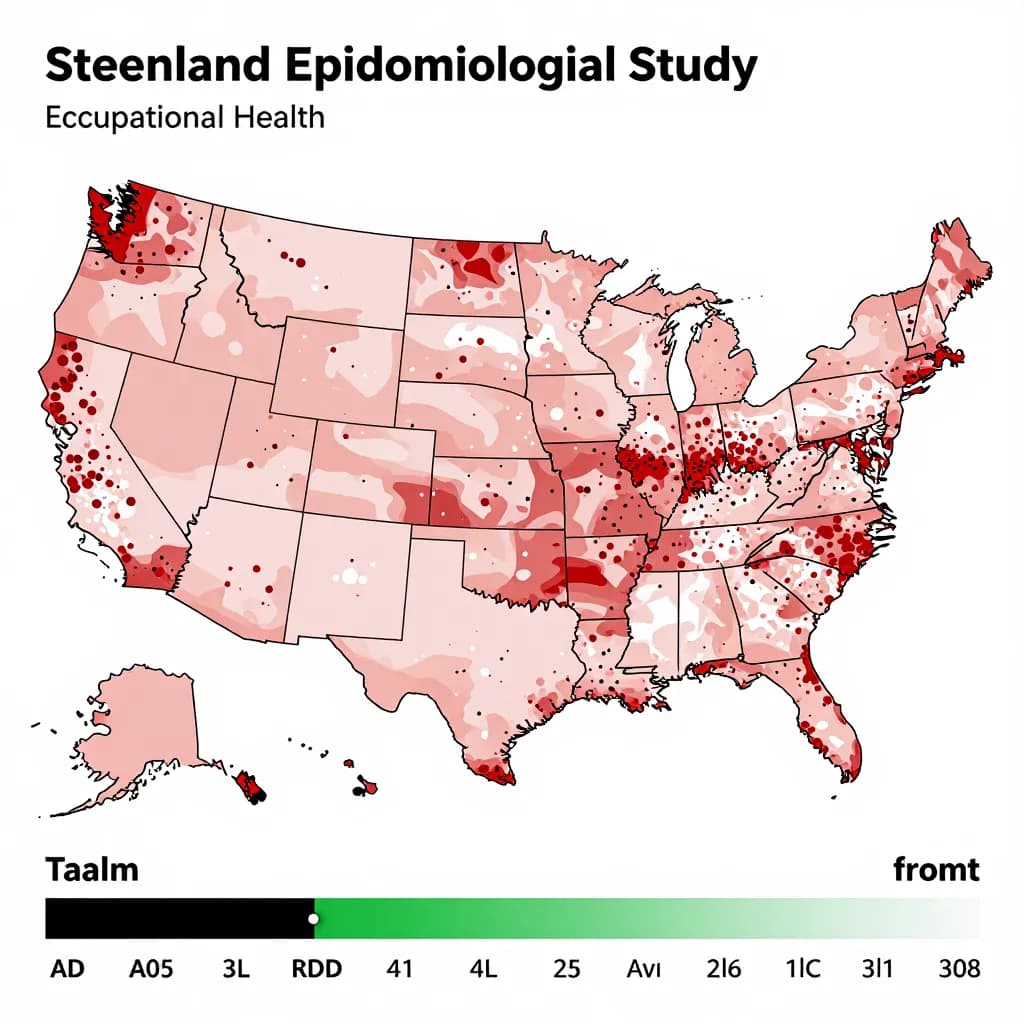
The cohort originated with Matanoski et al. (1986), who studied 57,175 union members from 1975-1979. The original findings established the baseline:
Ready to Start Your Project?
From one-off customs to 15,000-part production runs — get precise pricing in 24 hours.
On This Page
The 57,000-Painter US Cohort: Four Decades of Mortality Data
The Original Study (Matanoski 1986)
- Members of painting locals showed significant elevation in mortality from all malignant neoplasms, lung cancer, and stomach cancer compared to US white males
- The study demonstrated that union records could serve as a powerful epidemiological tool
- Trade-specific analysis showed painters had higher risks than other allied trades
The Steenland & Palu Extension (1999)
Steenland and Palu extended the original study with 15 additional years of follow-up (1975-1994), creating the most comprehensive painter mortality dataset ever assembled:
- 42,170 painters and 14,316 non-painters
- 23,458 deaths observed (vs. 5,313 in the original follow-up)
- Direct comparisons with both US population and internal non-painter controls
Cancer Findings
External Comparisons (vs. US Population)
Painters showed significantly increased standardized mortality ratios for multiple cancers:
| Cancer Site | SMR | 95% CI |
|---|---|---|
| Lung cancer | 1.23 | 1.17-1.29 |
| Bladder cancer | 1.23 | 1.05-1.43 |
| Liver cancer | 1.25 | 1.03-1.50 |
| Stomach cancer | 1.39 | 1.20-1.59 |
| All cancers | 1.12 | 1.09-1.15 |
Internal Comparisons (vs. Non-Painter Union Members)
The internal comparisons are methodologically stronger because they control for the "healthy worker effect" - the tendency for employed populations to be healthier than the general population:
| Cancer Site | SRR | 95% CI |
|---|---|---|
| Lung cancer | 1.23 | 1.11-1.35 |
| Bladder cancer | 1.77 | 1.13-2.77 |
| Stomach cancer | 0.92 | 0.68-1.25 (not significant) |
The 77% increased bladder cancer risk in direct painter-to-non-painter comparisons is particularly striking.
Non-Cancer Mortality: Suicide and Homicide
Beyond cancer, the cohort revealed elevated non-cancer mortality:
- Suicide: SMR 1.21 (95% CI: 1.05-1.38) - increased in painters but not non-painters
- Homicide: SMR 1.36 (95% CI: 1.04-1.75) - increased in painters but not non-painters
These findings suggest that solvent neurotoxicity may contribute to psychiatric morbidity and behavioral changes that increase suicide risk. The organic solvent-induced psychiatric symptoms documented in Scandinavian studies - depression, irritability, personality change - provide a plausible mechanism.
The Latency Finding
Perhaps the most important finding for policy was the latency pattern:
70% of cancer deaths in painters occurred 20 or more years after entering the union.
This long latency has profound implications:
- Current "safe" operations may appear problem-free while planting seeds of future disease
- By the time cancer is diagnosed, entire careers of exposure have accumulated
- Prevention must occur early in working life to be effective
- The full benefit of exposure reduction will not be visible for decades
Lung Cancer Trends Over Time
The lung cancer SMRs increased over successive calendar periods:
| Period | Lung Cancer SMR |
|---|---|
| 1975-1979 | 1.10 |
| 1980-1984 | 1.23 |
| 1985-1989 | 1.23 |
| 1990-1994 | 1.38 |
The increasing trend suggests that as the cohort aged and latency periods lengthened, more cancers attributable to earlier exposures became visible.
Cirrhosis and Alcohol Confounding
The study found elevated cirrhosis mortality in both painters (SMR 1.21) and non-painters (SMR 1.26), suggesting that alcohol consumption - common in both groups - confounded this finding. The absence of a painter-specific excess for cirrhosis supports the interpretation that alcohol, not occupational exposure, drove this mortality pattern.
Disability and Neuropsychiatric Outcomes
While the Steenland & Palu study focused on mortality, related research on the same cohort documented elevated disability rates. The Geneva painter cohort (a separate but complementary study) found painters had 1.23/1000 man-years neuropsychiatric disability incidence vs. 0.68/1000 for electricians - an approximately 80% excess.
Methodological Strengths
The US IBPAT cohort possesses several features that make its findings highly credible:
- Large sample size: 57,000 workers provides statistical power
- Long follow-up: 20 years captures latency-dependent outcomes
- Internal controls: Non-painter union members control for healthy worker effect
- Union records: Objective employment data reduces recall bias
- National scope: Multiple locals across the US increases generalizability
Limitations
- Exposure assessment: Based on job title ("painter") rather than direct measurement
- Paint composition changes: Historical exposures (lead, benzene, asbestos) differ from modern formulations
- Multiple exposures: Painters encounter complex chemical mixtures
- Smoking confounding: While internal comparisons address this, residual confounding may persist
Legacy and Impact
The 57,000-painter cohort has been cited in virtually every subsequent analysis of painter health risks. It formed the evidentiary foundation for:
- IARC's 1989 Group 1 classification
- IARC's 2010 reaffirmation and expansion
- The Guha meta-analyses (2010)
- The SYNERGY pooled analysis (2021)
- Multiple regulatory and policy discussions
For government specification, this cohort provides the population-level evidence that occupational painting causes excess cancer, suicide, and disability at scale. The question is not whether the risk exists - the 23,458 deaths in this cohort answer that definitively. The question is what we will do to prevent the next 23,458.
Ready to Start Your Project?
From one-off customs to 15,000-part production runs — get precise pricing in 24 hours.